
Turkish Salad
As an Amazon Affilate, I earn commission on qualifying purchases.

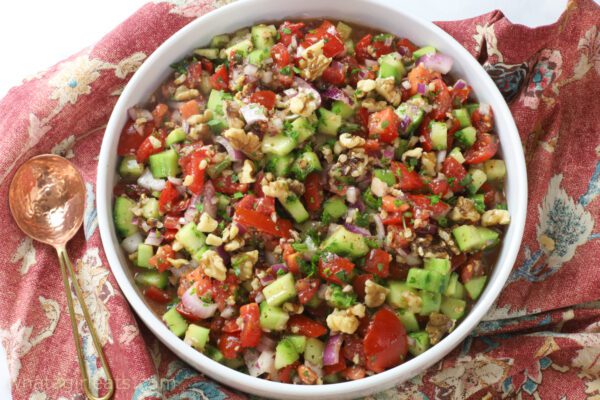
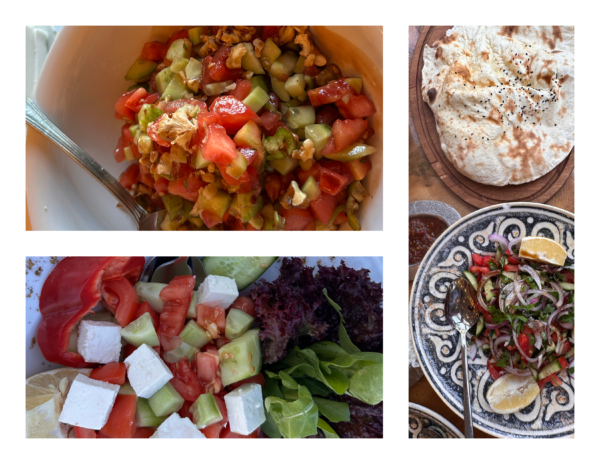
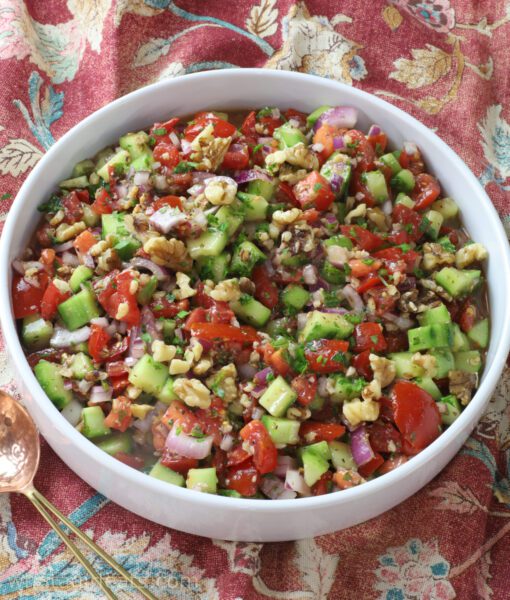
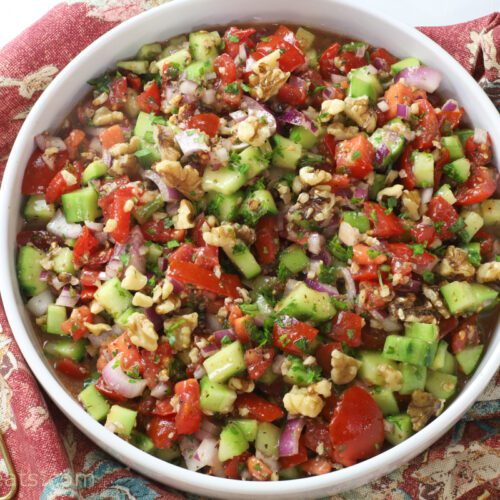
A Turkish salad with cucumbers, tomatoes, and walnuts in a dressing of pomegranate molasses and spices, is a light and fresh side dish that is part of nearly every Turkish meal. Whether breakfast, lunch, and dinner, some form of this salad is served. I recently returned from a visit to Istanbul. I was fortunate to be hosted by some dear Turkish friends. This salad, or a variation, was a part of every meal we had with them, whether in their home or at local restaurants.
What is mezze?
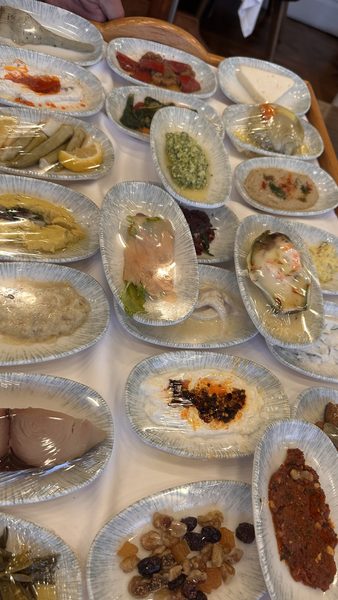
One thing we loved about Turkish cuisine was the “mezze”, or small plates that were brought to our table when we ate out. When we dined at home, the mezze still showed up as small plates of olives, dates, nuts, eggplant salad, or Turkish dip, along with bread. Below is a selection of some of the dishes offered to us at a local restaurant.
How is a Turkish salad different from a Greek salad?
While similar, there are indeed quite a few differences between a traditional Greek Village Salad and a Turkish salad.
- First of all, not all Turkish salads contain cheese. While some come with Bulgarian feta cheese or similar fresh cheese, just as often they were not.
- Both salads feature cucumbers and tomatoes. In fact, cucumbers are an integral part of Turkish cuisine, whether in a salad or a sauce/dip similar to Middle Eastern tzatziki.
- Classic Greek salads have Kalamata (black olives), while in Turkey, they are usually served separately as part of a meze platter.
- Green bell pepper are an integral part of a Greek salad, whereas they seemed to be optional depending on the cook or restaurant in Turkey. A Turkish pepper, similar to a shishito pepper, would sometimes make an appearance.
- Often the salad would contain chopped walnuts, and that’s the version I’m replicating here.
- The key difference between a Greek salad and a traditional Turkish salad would be the seasoning and dressing. While a Greek salad uses dried oregano, olive oil, and red wine vinegar, a Turkish salad has pomegranate molasses, fresh parsley, sumac, and Aleppo dried red pepper flakes. The pomegranate molasses was a bit life-changing, actually, and the first thing I did when I got home was purchase some so I could recreate this simple salad at home.
Exotic ingredients?
Unless you live in a very remote part of the country, you should be able to get most of the ingredients at your local markets, specialty Middle Eastern grocery stores, or CostPlus World Market.
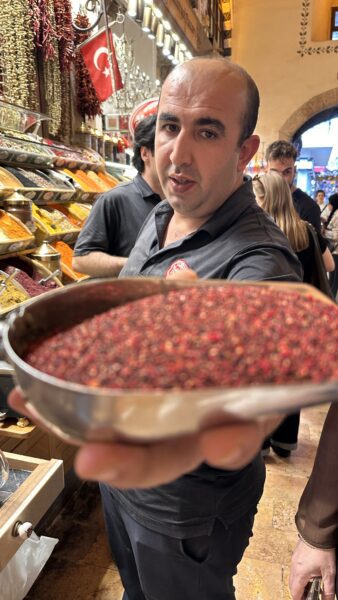
- Pomegranate molasses is a sweet reduction of pomegranate seeds and gives the salad that tangy flavor. If you like balsamic vinegar, you’ll probably love pomegranate molasses! You can also use it in place of the “sweet” in a basic Vinaigrette.
- Aleppo pepper, also called “pul biber”, is a traditional dried red pepper. If you can’t find them in the grocery store, substitute dried chilli flakes.
- Sumac. This spice is common in a few dishes. It gives a citrusy pop to any dish. You can find it online or at most large grocery stores.

Ingredients for this Turkish salad recipe
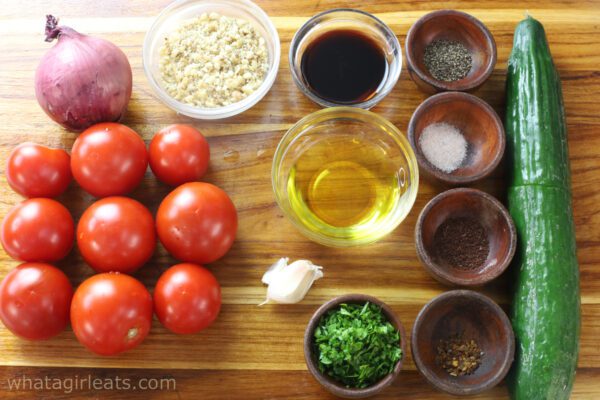
- Ripe tomatoes. The tomatoes in Turkey are wonderful. Even though this seems like a summer salad, we had it in mid-October, and the tomatoes were so flavorful.
- English cucumber or Persian cucumbers. English cucumbers have thinner skin than regular cucumbers, but subsequently don’t have as long a shelf life. While Persian cucumbers are smaller than English cucumbers, they have the same thin skin. It’s not necessary to peel either Persian or English cucumbers, as the skin is edible. For regular cucumbers, peel and seed the cucumber.
- Small red onion. To remove some of the bitterness, soak the chopped onion in cold water for 10 minutes, then drain excess liquid.
- Flat-leaf or Italian parsley, which is less bitter than curly-leaf parsley.
- Garlic. Not too much. It shouldn’t overpower the salad.
- Walnuts. Chopped walnuts were in many of the salads we ate. The chopped walnuts give this salad a lovely, unexpected crunch.
- Pomegranate molasses. This is a key ingredient!
- Good quality extra virgin olive oil
- Sumac
- Fresh lemon juice
- Kosher salt
- Aleppo pepper or red chili flakes. This gives the salad a little heat, but is not overpowering.
- Black pepper

How to make a Turkish salad
- Cut the tomatoes into bite-sized pieces. Peel and seed cucumbers unless they are English hot house or Persian cucumbers. Cut into small chunks.
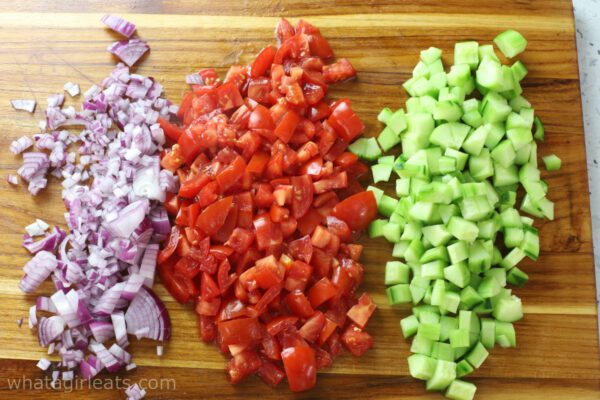
- Dice purple onion and soak in cold, salted water for 10 minutes to reduce the sharpness of the onion. (optional). Drain and pat dry.
- Wash and chop parsley.
- Mince garlic and finely chop walnuts.
- In a large bowl, toss the tomatoes, onions, cucumbers, garlic, walnuts, and chopped parsley.
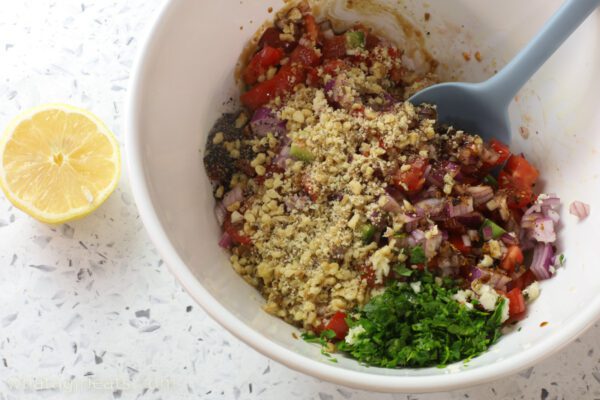
- Add olive oil, pomegranate molasses, sumac, and red chili flakes, and toss to coat.
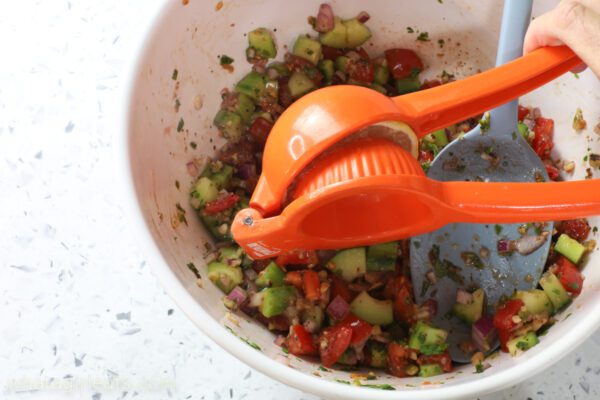
- Season to taste with kosher salt, pepper, and lemon juice. Garnish with coarsely chopped walnuts and additional chopped parsley if desired.
- Store in an airtight container in the fridge until ready to serve.
What to serve with a classic Turkish salad
This is a delicious salad to serve with any Middle Eastern main dish. It’s the perfect balance to heavier meat dishes. Serve it with kebabs, Grilled Chicken, Rice Pilaf, or Lamb Kibbeh.

Interested in more Mediterranean Salads and dishes?
Tabbouleh is another light salad made from fresh chopped parsley, bulgur wheat, and fresh tomatoes.

This Mediterranean Cucumber Salad has its roots on the Dalmatian coast.

Quick Greek Gyros Salad combines all the flavors of a traditional shepherd’s salad with Middle Eastern seasoned ground meat.

Turkish Salad
Ingredients
- 1 lb Tomatoes diced
- 1 English cucumber diced
- 1 small red onion diced
- 1 clove garlic minced
- 2 Tablespoons fresh parsley finely chopped
- 1/4 cup walnuts finely chopped
- 3 Tablespoons olive oil
- 2 Tablespoons Pomegranate molasses
- 1/2 teaspoon Sumac
- 1/4 teaspoon red pepper flakes or Aleppo pepper
- kosher salt to taste
- black pepper to taste
- 1/2 lemon to taste
Instructions
- Dice tomatoes, cucumbers and onions.
- If desired, to reduce sharpness of onion, soak onions in cold, salted water for 10 minutes. Drain and pat dry.
- Toss tomatoes, onions, cucumbers, parsley, and chopped walnuts in a large bowl.
- Add spices, molasses, and olive oil. Toss gently.
- Check for seasoning adding fresh lemon juice, salt and pepper to taste.
- Garnish with additional chopped walnuts and fresh parsley.
Nutrition




I’d serve it as a veggie lunch with lots of fresh, crusty bread! 🙂
Thank you for making my ramazan much decliouser. I will go for it tonight
I really need to incorporate some healthy meals back into my life… Too many pizzas, cookies and the like! This looks perfect to get me back in the groove!
Ha! True! My girls are older now, so they enjoy eating lots of veggies and few carbs…it’s good for all of us!
I am all about Mediterranean flavors so this is the perfect recipe for me! Currently traveling around the Amalfi coast in Italy so have been eating a ton of eggplant, peeppers, and all sorts of grilled veggies and olives. Mediterranean flavors are the best!
I agree and so much healthier!
I love all of the flavors you’ve used in this recipe. I’m sure this is something that will be appreciated in my home. Can’t wait to try it.
Thank you!
Love Love vegetables prepared this way. They go great with any grilled meat and are a perfect companion dish for summer. Easy to make and delicious to eat.
This looks so delicious and perfect for a busy weeknight dinner! Love that it’s ready in under 30 minutes! Mediterranean flavors of some of my fav! This is a must make!
My daughters just ate them cold out of the fridge!
I all about veggie sides that are easy to make and pack tons of flavor! This looks so good, and I love that the marinade can also be used as a dressing, so less work to do!
yes they do! We use leftovers in sandwiches and salads!
I love Mediterranean recipes! They are so healthy and delicious!
Right!? Thank you!
The Turks really know how to make salads!By any chance did you have çilbur for breakfast?